

Article written by Miles Henson
Brilliant business leaders, with a growth mindset, have spent decades exploring MBA case studies, management frameworks, and books on leadership in search of the formula for high-performing teams. But some of the clearest, most battle-tested leadership lessons come from a different arena entirely, elite sport. What’s more, they get beamed into the TVs in our homes every weekend.
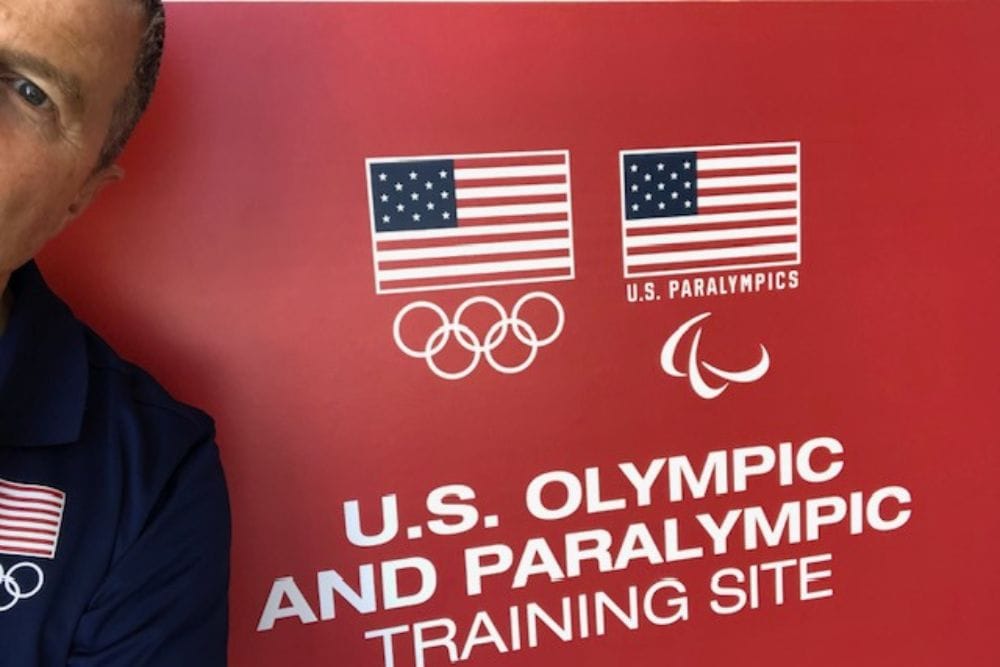
In this blog, Axiom Communications coach, trainer and facilitator, Miles Henson, explores what business leaders can learn from professional sport and apply in their organisations to power their performance. And Miles is ideally placed to comment. When he isn’t working with leadership teams in the commercial world, he can be found at sporting bootcamps, helping, amongst others, the US Olympic Coaches develop the interpersonal skills they need to get the best possible performance from the athletes they work with.
Leadership lessons from the locker room to the boardroom
Miles explains:
I’ve been privileged to work with both leaders in commercial organisations and coaches in elite sport, all around the world, for three decades.
Throughout that time, I have been struck by the fact that elite athletes and the coaches behind their medal-winning performances frequently operate in conditions that most executives only face occasionally: real-time pressure, public failure, brutal accountability, microscopic analysis, and the often-cited ‘fine margins’ between winning and losing.
This environment forces leadership principles to get stripped down to what really works. Nothing theoretical survives combat in an Olympic final or championship play-off. Indeed, this hyperfocus is brilliantly demonstrated by the British rower, Ben Hunt-Davis, who coined the simple but ruthless question ‘Will it make the boat go faster?’ to laser-target their training regimes. He and his team won gold.
And this growth mindset, as we would call it in business, is further evidenced by Mixed Martial Arts coach John Kavanagh, who famously said, ‘We either win or we learn.’
The parallel between the lessons learned in the locker room and the behaviours that drive success in the boardroom is clear. In both environments, the challenge is very similar: how can you get a talented group of people, often with big egos, to work together and play to their individual strengths, performing at a level none of them could reach alone to achieve a shared collective ambition?
Perhaps in sport, more than in the commercial world, underperformance is seen immediately and in the full glare of publicity. The scoreboard doesn’t lie, and there is no PR department to massage the news before the latest business results are declared.
This unforgiving clarity is precisely why we can learn so much from the world of elite sport. The lessons have already been pressure-tested at the highest levels of competition.
Leadership strategies inspired by sporting success
Let’s explore what we can learn from arguably the greatest team in the history of international sport: the New Zealand All Blacks Rugby Union team. Their leadership culture was documented by James Kerr in his brilliant book, Legacy: What the All Blacks Can Teach Us About the Business of Life, and it produced a principle that has since become shorthand in leadership circles: ‘No xxxxheads’.
The code of conduct, agreed by the players themselves, is exactly what it sounds like. Talent alone doesn’t earn a place on the team. Players who undermine collective goals through selfish or disruptive behaviour are thrown off the team, again by the players, regardless of individual skill.
For business leaders, this reframes one of the most common and costly management mistakes: overvaluing individual brilliance at the expense of team cohesion. A star performer whose leadership behaviours erode trust, build empires, or create friction can cost an organisation far more than their output contributes. High-performing cultures don’t tolerate that trade-off, no matter how impressive a CV looks.
The All Blacks truly live by the code of conduct they co-create. They are not empty words on a poster in the dressing room; they are the way ‘we do things around here’.
I could easily fill this blog with lessons learned from the All Blacks, but let me pick just one more that many leaders could live their lives by: ‘Plant trees you’ll never see’. This is all about creating a legacy, the title of Kerr’s best-selling book. The All Blacks see themselves as custodians of their beloved shirts for the relatively short period of their playing careers. In the same way, business leaders are custodians of the company brand while they are in office. Both can leave the ‘shirt’ in a better place than when they found it.
A brilliant example of ‘planting trees you’ll never see’ was when New Zealand’s Sonny Bill Williams awarded his World Cup-winning medal to a nine-year-old child who was being shooed off the pitch by a security guard, before it had even had a chance to get warm around his neck. And this was no planned PR stunt; it was captured in the moment by a few fans using their mobile phones.
In business, we must ask ourselves: are our values just positive-intent posters on the wall with irrelevant images meant to inspire, or do we truly live by them, evidenced daily in actions, not just words?
The athlete’s mindset: leadership for peak performance
NBA legend Kobe Bryant played his entire 20-year career with the Los Angeles Lakers, won five championships, and became known for his ‘Mamba Mentality’ philosophy of relentless work ethic and continuous improvement.
Leadership under pressure is as much a mental discipline as it is a strategic one. Bryant described his leadership philosophy as ‘a continuous quest to become the best version of yourself’: a daily commitment to refinement.
We carry this concept forward in our Straight A’s Approach to Interpersonal Excellence at Axiom, and indeed in my work with the US Olympic coaches. In both cases, using the psychometric tools of DISC or Insights Discovery as a ‘track to run on’, we talk about being the best possible version of yourself, to create win/win outcomes for you and the people around you, whilst still being true to yourself.
Indeed, Bryant was known for tailoring his approach to each teammate individually, studying what motivated them rather than applying a single leadership style across the board. There was no one-size-fits-all playbook, only a relentless commitment to understanding what each person on the team needed in order to perform at their best.
Central to Bryant’s approach was a focus on process over outcome: detaching from the scoreboard in any given moment to concentrate fully on preparation, habits, and incremental improvement. In business, I have seen these habits become part of the DNA of successful companies, creating the foundations for outstanding performance, that continue to deliver impact long after individual leaders have moved on.
Tennis great Serena Williams won 23 Grand Slam singles titles, the most of any player in the Open Era, male or female. She also won 14 Grand Slam doubles titles, all with her sister Venus, and two mixed doubles titles.
Williams offers a complementary lesson on the mental side of high performance. She explained, ‘Composure is not a personality trait, it’s a product of preparation’. She became known for her ability to regulate her emotional state during the highest-pressure moments of a match, treating setbacks as data rather than verdicts on her ability.
This mindset is inspirational for any business leader who is experiencing a difficult quarter or an initiative that isn’t quite achieving its intended outcome. Williams says, ‘A champion is defined not by their wins but by how they can recover when they fall.’
In business, leaders who focus on process metrics, decision quality, preparation rigour, and execution consistency tend to build more resilient teams than those who fixate solely on quarterly results. And we surely need personal resilience more than ever in today’s challenging business climate.
Again, we can call on the All Blacks culture: ritualise to actualise.
How world-class athletes inspire high-performing teams in business
Not every leadership lesson from sport is about charisma or intensity. Tim Duncan, the five-time NBA champion who anchored the San Antonio Spurs for nearly two decades, built his influence on the opposite instinct: quiet, consistent competence.
At a time when many of his contemporaries led through vocal intensity and force of personality, Duncan explicitly rejected that model. ‘I’m not a yeller and a screamer and a jumper and a pusher’, he said of his own style. Instead, Duncan led through steadiness, speaking selectively and holding himself to the same standards he expected of others.
Duncan’s model is frequently cited today as a case study in quiet competence, in stark contrast to a business culture that often rewards visibility and personal branding over substance.
There is an important lesson here for leaders who equate leadership with being the loudest voice in the room. Duncan’s teammates and coaches consistently point to the same quality: he made everyone around him better without needing to be the centre of attention.
In a business context, that looks like a leader who spends more time removing obstacles for their team than promoting their own contributions, and who is judged, and judges themselves, by the team’s results rather than personal recognition.
I find that people in the commercial world often mistakenly assume that to succeed in business, you need to be a chest-beating, dominant, direct, driven, assertive, win-at-all-costs individual. In DISC or Insights Discovery terms, that means being a high D individual, or leading with red energy.
Well, I’ve got some good news. That simply is not true in the vast majority of scenarios.
Consistency, fairness, and reliability compound over time in ways that charisma alone cannot. Teams that see standards applied evenly, without favouritism toward top performers, develop stronger internal trust and far less internal politics.
As Jim Collins told us at the turn of the millennium, in his outstanding book Good to Great, the best leaders blend deep personal humility with intense professional will; they’re driven to make the company great rather than to promote themselves. He also argued for a culture of discipline: disciplined people, disciplined thought, and disciplined action, paired with an entrepreneurial ethic, rather than heavy-handed control.
How the athlete’s mindset can drive business performance
Few of these lessons from the world of elite sport require an executive to start delivering locker-room speeches at their quarterly all-hands on MS Teams or throwing water bottles around in board meetings.
What elite sport offers is a distilled, high-stakes laboratory for leadership principles that apply just as directly to high-performance teams in business as they do in world-class sport.
I recommend you build your teams around co-created values and codes of conduct, not just individual talent, as the All Blacks do. Treat composure and preparation as skills to be trained, the way Kobe Bryant and Serena Williams did, rather than traits some people simply have, and others don’t.
Build a laser-focused approach to what you want to achieve, expressed in plain English, as Ben Hunt-Davis did, to guide the actions you take, or indeed choose not to take.
Adapt your approach to the individuals you lead instead of defaulting to a single style. And let consistency and fairness, not desk-thumping rants, be the true foundation of your authority, the way Tim Duncan built his.
The mastery of these philosophies is open to us all, and they are proven to work in the cauldron of world-class sport every bit as much as they do in the white-hot heat of today’s commercial landscape.
Ultimately, these ways of working can positively impact the bottom line of your business.
If you are ready to strengthen your leadership development by learning from elite athletes and apply their lessons to help your business perform at its full potential, simply reach out. Working together, we can help you get fit for the future, deliver world-class results, and leave a legacy people will talk about in positive terms for years to come.
Contact us >